 Keith Bell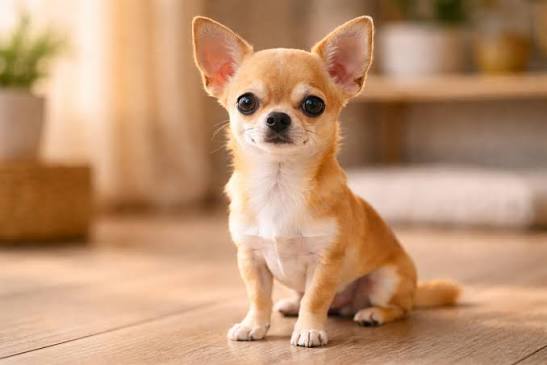
A well socialized chihuahua puppy carries itself differently. You can see it in the relaxed body, the loose way the tail moves, how fast it bounces back after something startles it. Those signals tell you more about a puppy’s temperament than any pedigree paper ever will. At Dreamer’s Pups, we’ve spent over two decades raising chihuahuas who walk into the world confident rather than fearful, and this guide walks through exactly what that looks like.
Let’s be honest about something up front. Chihuahuas have earned a reputation for being yappy, snappy, and defensive. But most of that comes from dogs who simply were never properly socialized — it’s not the breed, it’s the upbringing.
Here’s what a well socialized chihuahua actually looks like, how the timeline works, and what you can do to build that confidence from the ground up.
Calm Body Language and Relaxed Posture
A well socialized chihuahua holds its ears in a neutral position — not pinned flat against the skull, not rigidly pointed forward. Its tail sits low and swings in a loose, wide arc, not stiff or tucked. When someone the puppy doesn’t know walks over, it might pause and size them up for a second. But it won’t freeze, tuck its tail, or scramble backward to get away.
The American Veterinary Medical Association’s guidance on dog behavior points out that relaxed posture and voluntary approach are the clearest signs a dog feels safe around people. That holds true for chihuahuas just as much as any larger breed.
Don’t forget to watch the mouth. A soft, slightly open mouth with no lip curl means the puppy is comfortable. A closed mouth with tight corners — what behavior folks call “tight commissures” — is an early stress signal, not a neutral expression. A lot of people miss that one.
Confident Greetings With People and Other Dogs
Confident greetings are almost boring to watch, honestly. The puppy walks up, sniffs, and either sticks around to engage or just wanders off to explore something else. No drama, no theatrics.
When playing with other dogs, there should be natural pauses built in. A puppy that self-interrupts, does a quick shake-off, then jumps back into play is regulating its own excitement. That’s a strong sign of good canine social skills.
Here’s something most guides skip entirely: the recovery test. Clap your hands once, loud enough to startle the puppy. A well socialized puppy will flinch or look up — then go right back to whatever it was doing within a few seconds. A puppy that stays frozen or hides for several minutes needs more gentle exposure work before it’s ready for bigger challenges.
The Chihuahua Socialization Timeline: Milestones From 8 to 16 Weeks
The socialization timeline matters more for chihuahuas than for most breeds. Here’s why: toy breeds finish their critical socialization window while they’re still small enough to be carried everywhere in your hand. The work doesn’t happen on its own — it has to be deliberate. Most veterinary behaviorists put the steepest part of that learning curve somewhere between 3 and 14 weeks, with a fear period overlapping right around 8 to 11 weeks (avma.org).
That overlap is the tricky part. A puppy can be in its most receptive learning phase and its most fragile fear phase at the same time. The answer isn’t to stop exposing the puppy to the world. It’s to keep every exposure short, calm, and paired with food — and to pay more attention to how fast the puppy recovers than to how it reacts in the moment.
Socialization Checklist by Age
Below is a working checklist broken down by week. The daily target is short, separate sessions — not one long marathon. For a toy breed, 3 to 5 minutes per session is the sweet spot. Go longer than that and you’re usually training the owner, not the puppy.
| Age | Core Focus | Specific Experiences | Observable Pass Signal | Daily Target |
| 8-10 weeks | Handling and household desensitization | Cradle hold, paw touch, ear lift, vacuum at low volume, doorbell recording, tile/wood/carpet/grass surfaces | Puppy accepts handling for 2 seconds without pulling away, then takes a treat | 3 short sessions |
| 10-12 weeks | New people and gentle novelty | One new person per day (hat, beard, glasses, stroller, cane), short car ride to a quiet parking lot, grooming brush touch | Puppy approaches a stranger within 30 seconds or accepts a treat from their hand | 2 outings plus 1 handling session |
| 12-14 weeks | Leash manners, vet and groomer exposure, calm greetings | Walk on a quiet sidewalk, sit in a vet lobby for 5 minutes without an exam, meet a groomer for a treat-only visit, practice “sit” for greeting | Puppy takes treats in the new environment and recovers from a startle within 5 seconds | 1 new place per day |
| 14-16 weeks | Other vaccinated dogs and structured obedience | Puppy class or a known calm adult dog, 5-minute structured play with pauses, name response, sit, down, come | Puppy self-interrupts during play, responds to name, and returns to handler | 1 structured play plus 2 training sessions |
How to Read the Checklist
Checking a box isn’t the goal — the pass signal is. If the puppy takes treats, approaches things on its own, and recovers from a startle within seconds, the experience landed well. If it freezes, refuses food, or hides, the exposure was too intense and you need to dial it back to smaller steps.
A few practical rules that keep the checklist honest:
One new variable at a time. A new place plus a new person plus a new sound is three variables stacked together, not one.
Repeat before you advance. A puppy that handled a session well once hasn’t necessarily learned it. Aim for three calm repetitions before moving on to the next zone.
Log the recovery time. Write down how many seconds it takes the puppy to return to normal after a startle. That number is the single best progress metric you have.
Skip the dog park. Until the puppy is fully vaccinated and has a solid recovery pattern, crowded dog parks pile on triggers faster than a toy breed can process them.
> Pro Tip: Pair every new experience with a high-value treat *before* the puppy notices the trigger. If the treat comes after the startle, you’re rewarding fear instead of preventing it. The order matters: trigger appears, treat appears, puppy notices both.
The Fear Period Overlap
The fear period typically hits between 8 and 11 weeks — the exact window where a single scary event can imprint in a way it wouldn’t at other ages (vcahospitals.com). Keep exposures short, calm, and paired with food. Don’t push a puppy that’s already over threshold. If it shuts down, end the session, create some distance, and try a smaller version tomorrow. A missed day costs you nothing. A flooded puppy can cost you months of remedial work.
> Watch Out: If your puppy is still refusing food in new environments past 16 weeks, that’s not a checklist problem — it’s a stress-threshold problem. It’s worth having a conversation with your veterinarian or a certified behavior consultant before you push further.
Signs of Fear in Chihuahua Puppies (and How They Differ From Calmness)
Fear signs in chihuahua puppies often get misread as calmness, and here’s the reason: small dogs tend to freeze quietly rather than make a scene. You have to look closely at the eyes and tail to tell the difference.
A fearful puppy tucks its tail tight against its belly, avoids eye contact, and might lip-lick when there’s nothing edible around. Some yawn over and over. Others go completely still and refuse treats — which is a serious signal, because a truly relaxed puppy will almost always eat.
Fear-based barking and aggression usually show up when a puppy feels cornered. If your puppy is barking from behind your legs, it’s not protecting you. It’s asking you to help create distance from the thing scaring it.
One thing you shouldn’t do: pick up a fearful chihuahua to “rescue” it from a situation. Lifting a scared dog teaches it that the scary thing wins and you’ll always bail it out. Instead, increase the distance, let the puppy settle on its own, then reward the calm behavior that follows.
Positive Reinforcement for Chihuahuas: Building Confidence Without Force
Positive reinforcement works so well for chihuahuas because it builds confidence instead of just suppressing behavior. Reward-based training teaches the puppy what *to* do rather than punishing what *not* to do. For a sensitive toy breed, that distinction is everything — it’s the difference between training that sticks and training that backfires.
The core technique is counter-conditioning: pair something mildly worrying — a vacuum running, a stranger at the door — with something the puppy loves. Repeat that pairing until the trigger starts predicting good things instead of scary things.
Confidence building happens in small increments:
- Reward voluntary exploration of a new object
- Mark and treat any moment of relaxed posture
- Let the puppy choose whether to approach a new person
- End every session on a success
Avoid flooding. Tossing a scared puppy into a busy dog park to “get used to it” does the exact opposite of what you want. Trigger stacking — where stressors pile up before the puppy can recover from the last one — is the fastest route to a reactive adult dog.
> Watch Out: A puppy that stops eating treats mid-training has hit its stress threshold. Continuing the session teaches the puppy that training itself feels unsafe. Stop, move away from the trigger, and try again at a lower intensity the next day.
The ‘Small Dog Syndrome’ Myth vs. Reality
Small Dog Syndrome isn’t a real diagnosis. It’s a label people slap on a small dog that behaves badly, and it hides the actual cause: inconsistent handling.
Owners pick up small dogs to stop barking. They carry them past anything that looks scary. They laugh at nipping because it seems cute when a four-pound dog does it. The dog learns that barking works and that the world gets handled for it — not by it. That’s not a breed trait. That’s a training gap.
Chihuahuas are fully capable of obedience training, leash manners, and calm behavior around other dogs — when someone actually takes the time to teach them. The breed is alert and territorial by nature, which means the bar for socialization is higher, not lower.
Treat a chihuahua like the dog it is. Same rules, same expectations, smaller body.
Desensitization Protocols for Handling and Grooming
Desensitization for handling and grooming is where most chihuahua owners lose the battle before it even starts. Chihuahuas have a reputation for being terrible about nail trims, ear cleanings, and vet exams. But the reason is almost never the breed — it’s that nobody ever taught the puppy that handling predicts something good.
Cooperative care fixes this with a simple sequence: touch, treat, release, repeat. And it’s the release that does just as much work as the treat, even though it’s the part most owners skip.
The Cooperative Care Sequence
Every zone follows the same four-step loop. The release teaches the puppy it has control — that it can leave if it wants to, which builds trust faster than anything else.
- Touch the zone for a fixed, short duration.
- Mark and treat while still touching, or immediately on release.
- Release the puppy and let it move away if it wants to.
- Repeat after a short pause.
If the puppy pulls away during the touch, the duration was too long. Cut it in half and try again. If the puppy pulls away during the release, the treat came too late.
Zone-by-Zone Protocol
Work through these zones in order, one per week. Each zone has a starting duration and a pass signal. Don’t advance until the pass signal is consistent across three sessions in a row.
| Zone | Starting Duration | Pass Signal |
| Paws and nails | Hold each paw for 2 seconds | Puppy leaves paw in hand and takes a treat |
| Ears | Lift the flap, look inside, 2 seconds | Puppy does not pull head away |
| Mouth | Lift the lip gently, 2 seconds | Puppy accepts a treat after release |
| Tail and rear | Touch the base of the tail, 2 seconds | Puppy stays oriented toward you |
| Collar and harness | Slide on and off without leaving the house | Puppy stands still for the clip |
| Nail trimmer | Touch the trimmer to each nail, no cut | Puppy does not withdraw the paw |
| Clippers or grinder | One nail, one treat, then stop | Puppy returns for the next nail |
Reading the Stress Signals During Handling
Tolerating handling is not the same thing as being comfortable with it. Watch for these signals, in rough order of how serious they are:
- Lip licking when no food is present
- Yawning in a quiet room
- Turning the head away or stiffening
- Tucking the tail or crouching
- Refusing treats
- Freezing completely
Freezing and refusing treats are the two that end a session. A puppy that won’t eat is over threshold, and continuing teaches it that handling is unsafe. Stop, move away, and try a shorter version tomorrow.
Applying the Protocol to Vet and Groomer Visits
Book a few “happy visits” before the real thing. The puppy walks in, gets treats from the front desk, and leaves — no exam, no scale, no table. Two or three of those before the first real appointment completely changes what the puppy expects when it walks through that door.
For the first real exam, bring a mat the puppy already associates with treats. Ask the technician to do the handling in the same order you practiced at home: paws, ears, mouth, tail. Most clinics will happily accommodate this if you mention it when scheduling. The same approach works for the groomer. A treat-only visit to meet the groomer and hear the clippers run for 30 seconds is worth more than a full groom the puppy isn’t ready for.
Habituation Does the Rest
Grooming tolerance builds through short, calm repetitions — not one long battle at the vet. Two minutes a day across a week beats a single 20-minute session every time. Enrichment supports the work too: snuffle mats, puzzle feeders, and short training games give a chihuahua a job and burn mental energy that would otherwise turn into barking.
> Key Takeaway: Cooperative care isn’t about making a chihuahua tolerate handling. It’s about teaching the puppy that handling is predictable, brief, and followed by something good. A puppy that trusts the sequence will stand still for a nail trim it doesn’t love — because it knows the release is coming.
Frequently Asked Questions
What are the behavioral signs of a well-socialized Chihuahua?
A well socialized chihuahua greets people with a relaxed body, soft eyes, and a wagging tail instead of tucked ears or backing away. It accepts gentle handling without freezing or nipping, bounces back quickly from sudden noises, and can settle on its own after a burst of excitement. It also reads other dogs’ cues and disengages instead of escalating. These behaviors show the puppy has had plenty of gentle exposure and built real confidence through positive reinforcement.
How do you know if a Chihuahua puppy has been properly socialized?
Ask the breeder what the puppy has already been exposed to before pickup. A properly socialized puppy has met different kinds of people, heard normal household sounds, walked on varied surfaces, and been handled for grooming and vet prep — all during that critical socialization window. When you visit in person, watch how the puppy responds to you. A confident puppy approaches, sniffs, and explores. One that hides or trembles behind its littermates may need extra work.
Do well-socialized Chihuahuas get along with other dogs?
Yes — when they were introduced to calm, vaccinated dogs during the socialization window. Well socialized chihuahuas read canine body language, use appropriate play signals, and back off when another dog signals disinterest. Size matters though: pair them with dogs that match their energy and play style, and keep early meetings in a controlled environment. Chihuahuas socialized only with humans often struggle with other dogs later on.
How can you tell if a Chihuahua is fearful versus well-socialized?
Fear looks different from calm. Signs of fear in chihuahua puppies include tucked tail, flattened ears, lip licking, yawning, whale eye, freezing, and backing away. A well socialized puppy might startle at a new sound but recovers within seconds and goes back to exploring. A fearful puppy stays shut down or escalates into barking, nipping, or hiding. If fear responses show up often, slow down and use counter-conditioning with treats.
Are well-socialized Chihuahuas less prone to ‘small dog syndrome’?
Small dog syndrome isn’t a breed trait — it’s a training gap. Chihuahuas labeled with it usually missed early socialization or were carried everywhere and never taught to walk, wait, or greet politely. Puppies raised with consistent positive reinforcement, including leash manners and calm greetings, grow into adults that handle new situations without barking or nipping. Structure and early exposure matter far more than size.
What role does early environment play in Chihuahua temperament?
Early environment shapes temperament more than genetics alone for most behavioral traits. Puppies raised in a home with children, household noises, and daily handling walk into their fear period with more coping skills. Those kept in kennels or isolated litters often show social anxiety and territorial behavior later. A breeder who raises puppies among family and exposes them to new surfaces, sounds, and people gives them a genuinely strong start.